
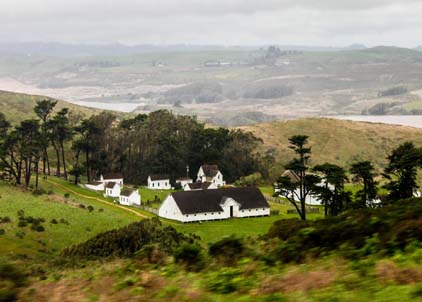
When people think about protecting remote cabins, ranches, hunting properties, or off-grid retreats, they often focus on locks, fences, cameras, or alarms.
But the most important element of remote property protection is often much simpler: awareness.
Remote properties naturally create conditions where activity can occur unnoticed for long periods of time.
Owners may visit only occasionally, and many properties are isolated from nearby traffic, neighbors, or public visibility.
In these environments, problems are often discovered long after they begin.
That delay creates vulnerability.
A gate may remain open for days. Trespassers may repeatedly access the property. Equipment may disappear. Storm damage may worsen over time.
In some cases, unauthorized visitors may return simply because they realize no one is regularly monitoring the land.
For many remote property owners, delayed discovery becomes the greatest risk.
Awareness Provides Earlier Response Time
This is why awareness matters so much.
Awareness means understanding when activity begins — not just discovering the aftermath later.
Earlier awareness allows owners to:
- investigate problems sooner
- contact neighbors or authorities
- respond before a small issue becomes larger and more expensive
That timing difference can be critical on rural land.
Most remote properties have only a handful of practical entry points, such as:
- gates
- driveways
- trails
- bridges
- access roads
These areas naturally funnel movement onto the property and often provide the earliest indication that someone has entered the land.
In many situations, knowing that someone entered the property is the first and most valuable warning sign.
Detached Structures Require Additional Awareness
Detached structures deserve attention as well.
Cabins, sheds, workshops, RV storage areas, and equipment buildings frequently contain valuable:
- tools
- generators
- trailers
- fuel
- ATVs
- recreational gear
Because these structures may sit far from the main cabin, activity around them can easily go unnoticed during long absences.
Environmental visibility also plays an important role in awareness.
Overgrown vegetation, hidden approach routes, and dark access areas create opportunities for unwanted activity while reducing the ability to identify movement across the property.
Improving sight lines near gates, structures, and driveways can significantly improve overall awareness.
Remote Properties Require Reliable Outdoor Monitoring
Traditional residential security systems are not always ideal for these environments.
Many depend heavily on stable WiFi connections and compact residential layouts.
Remote properties, however, often involve:
- large acreage
- difficult terrain
- detached structures
- limited infrastructure
This is why dependable long-range monitoring becomes so important.
Real-time alerts can dramatically reduce delayed discovery.
Receiving notification when movement occurs near gates, cabins, sheds, or equipment areas allows owners to become aware of activity much sooner — even when they are miles away.
Earlier awareness often prevents larger losses later.
At the same time, simplicity and reliability remain essential.
Remote properties are rarely ideal for complex systems that require constant maintenance or troubleshooting.
Durable, weather-resistant solutions designed specifically for outdoor environments generally provide better long-term performance.
Awareness Provides Peace of Mind
Ultimately, protecting remote property is not simply about reacting to problems after they occur.
It is about maintaining awareness across areas where visibility and response times are naturally limited.
For remote landowners, awareness provides something every property owner values: greater confidence, better protection, and peace of mind whenever they are away from the land.