
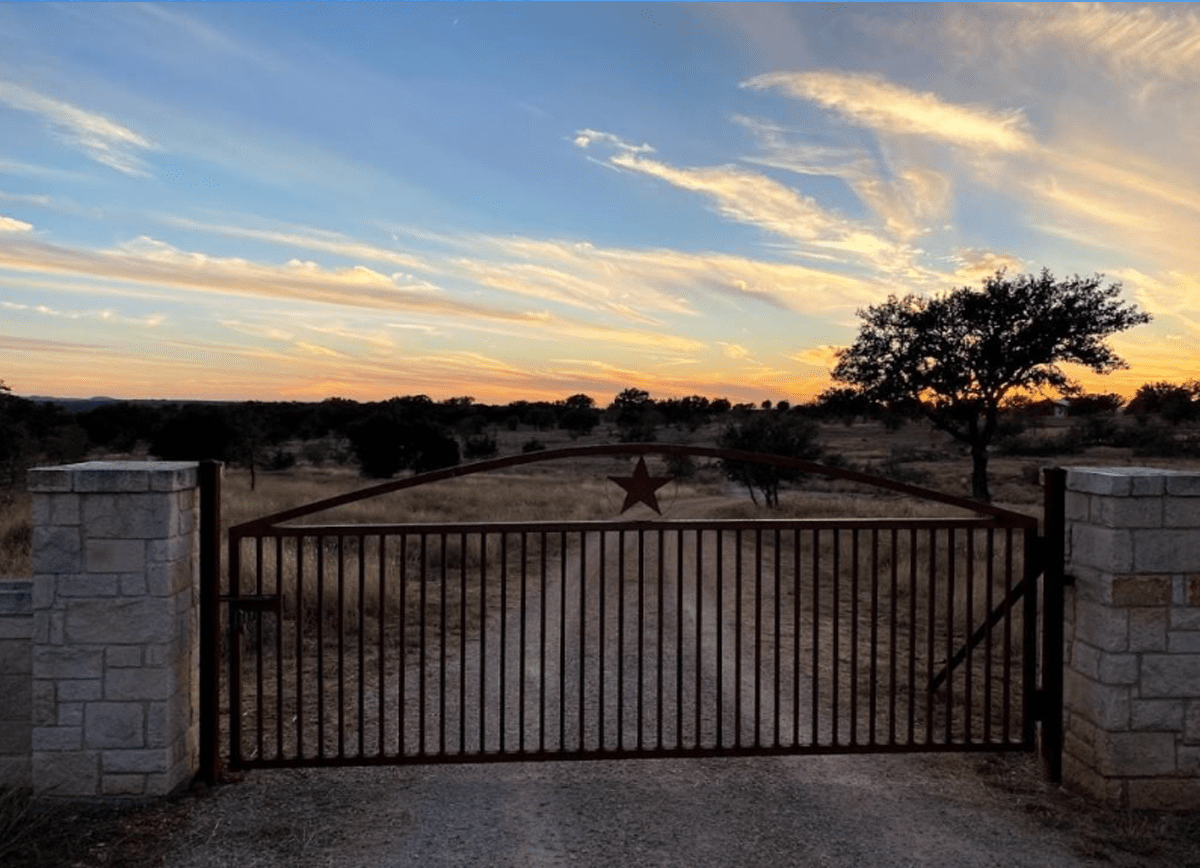
Why Access Points Matter Most on Remote Properties
When people think about protecting remote property, they often focus first on buildings. Cabins, workshops, sheds, and equipment storage areas naturally receive the most attention.
But on remote land, the most important areas to monitor are often much farther away from the structures themselves.
They are the access points.
Gates, driveways, trails, bridges, and vehicle access roads act as natural funnels onto a property. In many cases, they provide the earliest indication that someone has entered the land.
For remote property owners, that early awareness can make a major difference.
Remote Properties Create Unique Visibility Challenges
Unlike suburban homes, recreational and off-grid properties frequently cover large areas with limited visibility. Buildings may sit hundreds of yards — or even miles — from the main entrance.
Trees, hills, valleys, and terrain can easily hide movement across the property.
Once someone reaches the structures, valuable time has already been lost.
That is why monitoring entrances often provides greater overall awareness than focusing exclusively on the cabin or equipment shed.
Access Routes Provide the Earliest Warning Signs
Most remote properties only have a handful of practical access routes. A vehicle may enter through a gate, travel a long driveway, cross a bridge, or follow a trail toward the interior of the property.
Monitoring these locations enables earlier identification of activity rather than discovering problems after damage has already occurred.
In many situations, knowing that someone entered the property is the first and most valuable warning sign.
Access-point awareness is important for more than just security. Property owners may also want to know when:
- contractors arrive
- guests enter the land
- deliveries occur
- vehicles approach structures
- unexpected movement takes place after dark
Even routine awareness can become extremely valuable on isolated properties.
Delayed Discovery Increases Risk
Remote landowners also face a challenge that suburban homeowners rarely encounter: delayed discovery.
A problem that occurs today may not be discovered for days or weeks if no one is physically present.
That delay can significantly increase losses.
For example, an unauthorized visitor who realizes a property is rarely monitored may return repeatedly. Equipment theft, fuel theft, vandalism, or trespassing often becomes more serious when there is little chance of immediate detection.
Earlier awareness changes that equation.
Remote Monitoring Requires a Different Approach
Environmental conditions also make access monitoring especially important. Remote properties may include wooded terrain, long distances, poor lighting, and limited internet connectivity.
Traditional residential security systems often struggle in these environments because they were designed for compact neighborhoods rather than large outdoor spaces.
Remote monitoring requires a broader approach.
Property owners should also pay attention to visibility around entrances. Overgrown brush, hidden approach routes, and dark gate areas create opportunities for unwanted activity.
Improving sight lines near gates and driveways can help discourage problems while making monitoring more effective overall.
At the same time, simplicity matters. Remote properties are not ideal places for systems that require constant troubleshooting or complicated maintenance.
Reliable, weather-resistant monitoring solutions designed for outdoor environments generally perform far better over time.
Awareness Begins at the Gate
Ultimately, gates and access roads provide more than physical entry onto the property.
They provide awareness.
And in remote environments, awareness is often the first step toward protecting everything beyond the gate.